

Stop the Sticky Tape Cycle: How the ChomChom Roller Actually Works (Without Batteries or Trash)
We need to talk about the “peel of shame.”
You know exactly what I’m talking about. You’re five minutes late for work. You’re wearing black pants. Your Golden Retriever, sensing your anxiety, decided to give you a goodbye hug. You grab that cheap plastic handle from the drawer and start rolling. One swipe, and the sticky sheet is dead. You try to peel it off to get a fresh one, but it tears down the middle. You spend precious minutes picking at the corner with your fingernail, frantically wasting three more sheets just to get a clean surface.
Then, you look at the bathroom bin. It’s a wad of crumpled, grey-coated paper.
I used to be stuck in this loop. I consider myself an eco-conscious person—I compost, I use glass jars, I refuse straws. But when I did a “trash audit” of my bathroom last year, I was horrified. About 30% of my landfill contribution was non-recyclable lint roller sheets. I was literally throwing money into the garbage can every single week.
When I first heard about the ChomChom Roller, I rolled my eyes. I thought it was just another “greenwashed” gadget promising magic results. But then I bought one, took it apart (because I need to know how things work), and realized something important: It isn’t magic. It’s physics. And it’s the only way to exit the single-use trap.
The Problem With Old-School Lint Removal
We have been conditioned to believe that cleaning requires “consumables.” Companies love this model. They don’t just want to sell you a handle; they want to sell you a subscription to sticky paper for the rest of your life. It is a brilliant business model for them, and a landfill nightmare for the planet.
Let’s look at the alternatives we’ve settled for:
- The Sticky Roller: It creates immediate waste. The adhesive chemicals make the paper difficult or impossible to recycle. If you have a heavy shedder, you might use 10 sheets on a single sofa cushion. That is unsustainable.
- The Vacuum: Effective, yes. But are you going to haul a 15-pound machine and plug it in every time you see cat hair on your throw pillow? It consumes electricity and is physically awkward.
- Generic Lint Brushes: You know the ones—the red velvet wands. They work okay, until they are full. Then you have to manually pick the hair out with your fingers, which sends dust flying back into the air.
Every time you toss a used sticky sheet, it sits in a landfill for decades. The ChomChom is my protest against this disposable culture.
The “Sorcery” Explained: Static Electricity & Friction
So, how does chom chom roller work if it doesn’t use glue?
The mechanism is surprisingly simple. It relies entirely on electrostatic charge generated by short, rapid friction. There are no batteries, no motors, and absolutely no adhesives.
Inside the head of the roller, there is a very specific interplay between two materials:
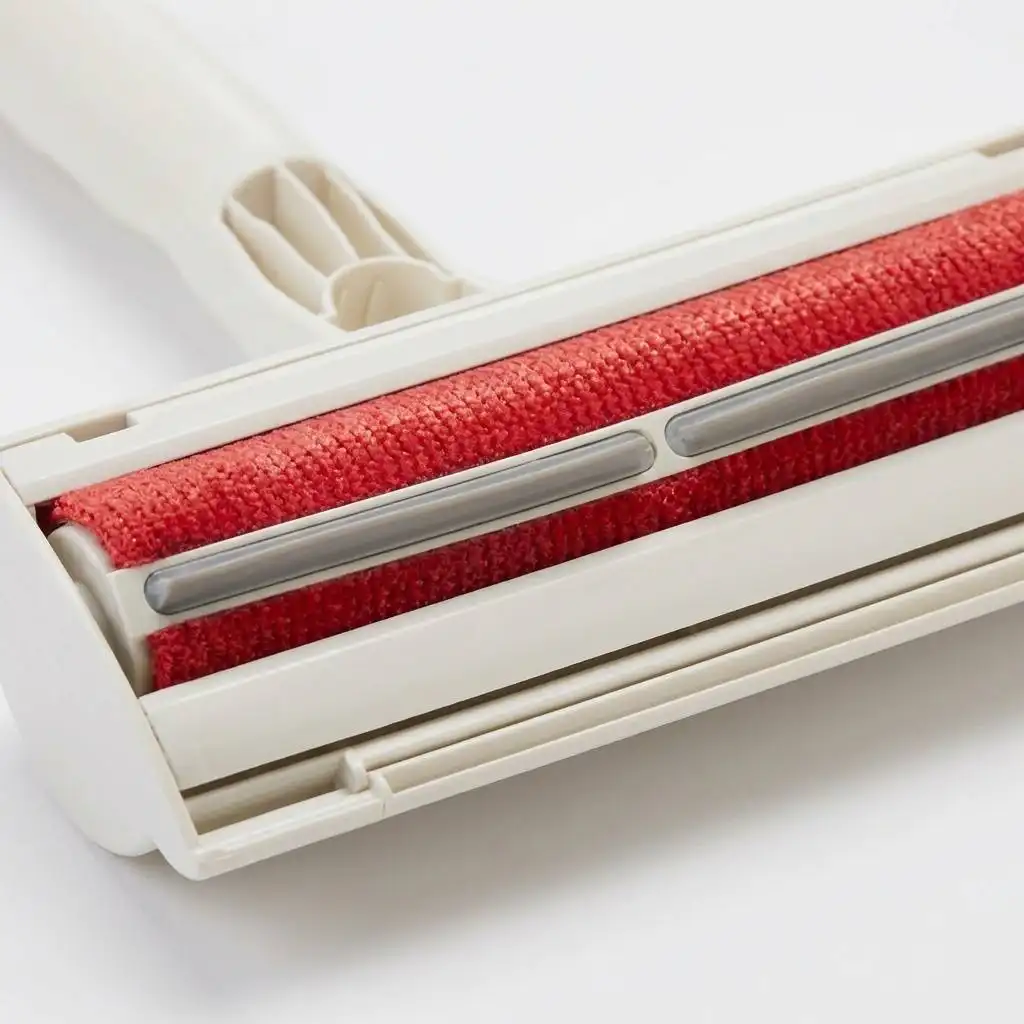
- The Micro-Bristle Fabric: The red strips you see aren’t just velvet. They are a patented nylon material with directional fibers. When rubbed against upholstery, these fibers create a static charge that acts like a magnet for pet hair.
- The Rubber Squeegee: This is the genius part. Between the two fabric strips sits a thin grey rubber blade. As you move the roller, this blade acts as a barrier and a scraper.
No glue. No chemicals. Just physics doing the heavy lifting.

Why The “Back and Forth” Motion Matters
This is where 90% of people get it wrong and claim the tool “doesn’t work.”
We are trained by sticky rollers to roll in one long, continuous motion—like painting a wall. If you do that with a ChomChom, nothing happens. It just pushes the hair around.
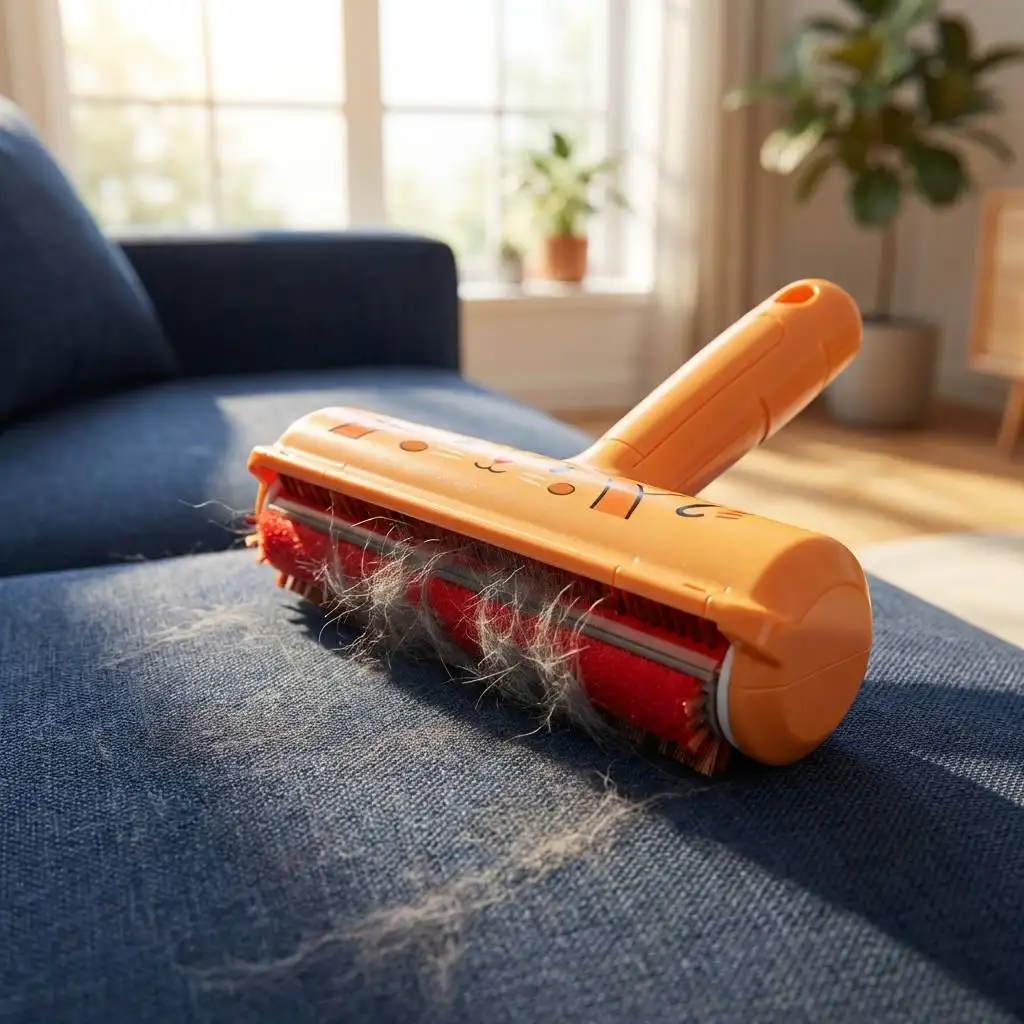
The ChomChom is not a wheel; it is a rocker. The internal mechanism is designed to flip. When you push forward, the red brush grabs the hair. When you pull back, the internal scraper activates, cleaning the brush and dumping the hair into the rear waste chamber.
Think of it like a windshield wiper that cleans itself with every single swipe. That clicking sound you hear? That is the sound of the brush flipping direction. If you don’t hear the click-clack, you aren’t generating the static charge needed to pull the hair from the fabric.
Anatomy of a Zero-Waste Tool
When you hold this thing, it feels substantial. It’s made of rigid, high-gloss plastic that feels like it can take a beating.
The “Trap Door” is my favorite feature. On the back of the head, there is a compartment that catches everything. There is something deeply satisfying about popping that lid and seeing a compressed brick of pure fur. You dump that fur directly into the compost (if you brush your pets with natural tools) or the bin. You aren’t throwing away plastic or coated paper—just the hair.
This is a “buy once” item. In a world designed to break in six months, a tool that relies on simple mechanical movement rather than complex electronics or cheap adhesives is a breath of fresh air.
The Eco-Impact: The Math Doesn’t Lie
I know some people balk at the upfront price tag compared to a $5 sticky roller. But “cheap” is expensive when you have to buy it forever. Let’s do the math on a typical pet owner’s usage.
| Feature | Traditional Sticky Roller | ChomChom Roller |
|---|---|---|
| Cost Model | Subscription (Refills forever) | One-time purchase |
| Annual Cost | $40 – $60 (approx. 12 refills) | $0 (after initial buy) |
| Waste Generated | ~700 sheets of coated paper | Zero |
| lifespan | 1 Month per roll | Years / Decades |
When you stop shipping refill rolls to your house every month, you are also cutting down on the carbon footprint of shipping logistics. It’s a small way of voting with your wallet.
Where The Science Fails (Honest Limitations)
I’m an activist, but I’m also a realist. I need to be honest with you: the ChomChom is not perfect for every single scenario. The physics of static electricity require specific conditions.
Where it struggles:
- Sleek, slippery surfaces: It won’t work well on leather, silk, or satin. There isn’t enough friction to grab the hair or tumble the rollers.
- Wet surfaces: Moisture kills static electricity instantly. If your dog just drooled on the couch, wipe it dry first.
- Hard floors: This is not a broom. It creates a terrible noise on concrete or wood and won’t pick up much.
- Long human hair: While it grabs fur easily, very long human hair can sometimes get wrapped around the internal wheel axles rather than flipping into the trap.
It needs the drag of a textured surface—like a cotton shirt, a linen sofa, or a fleece blanket—to activate.
Troubleshooting Your Technique
If you tried it and hated it, you were probably being too gentle. I see people using long, slow, elegant strokes. Stop that.
Don’t baby it. The ChomChom thrives on aggression. You need vigorous, short, fast strokes. Think of it like scrubbing a stain, not painting a masterpiece. The faster you rock it back and forth, the stronger the static charge becomes and the more hair it eats.
FAQ: The Mechanics of Fur Removal
Do I need to wash the brush inside?
No! Please don’t soak it. The friction mechanism cleans the brush automatically. Just empty the trap. If it gets dusty, a wipe with a damp cloth is all it needs.
Does the ChomChom roller wear out?
Technically, all fabric wears down eventually. However, the nylon used is incredibly durable. Unless you are using it on sandpaper, it should last for years.
Is it better than a vacuum?
For embedded hair, often yes. Vacuums suck air, but they don’t always “grab” hair woven into fabric fibers. The velvet brush physically pulls those hairs out. For dirt or crumbs, stick to the vacuum.
Why does it make that clicking sound?
That is the sound of success. It means the internal wiper blade is flipping back and forth, cleaning the brush and trapping the hair. If it’s silent, you aren’t doing it right!
