

Fur-Zoff vs. ChomChom: The Battle for Your Sofa (And the Planet)
We need to talk about the fur. You know the feeling. You walk into your living room, the sunlight hits your navy blue sofa just right, and suddenly you see it: a shimmering layer of cat hair woven into the fabric. It’s defeating.
In that moment of panic, it is so easy to reach for a sticky roller. Rip a sheet, roll, tear, throw away. Rip, roll, tear, throw away. It’s a landfill nightmare. Every time you toss a sticky sheet, you are essentially wrapping pet hair in non-recyclable plastic and burying it in the earth forever. That is an eco-crime I just can’t support anymore.
I’m Luna, and like you, I love my pets (three of them!), but I refuse to contribute to the mountain of sticky tape in our landfills. That’s why I’ve spent the last month putting two heavy-hitters of the “reusable” world to the ultimate stress test: the Fur-Zoff (the recycled warrior) and the ChomChom Roller (the mechanical contender).
I put these tools through hell to answer one question: Which one actually saves the planet by saving your sanity?
The Contenders: A Tale of Two Textures
Before we declare a winner, let’s look at what we are holding. Both tools promise to liberate us from the sticky roller cycle, but they go about it in drastically different ways.
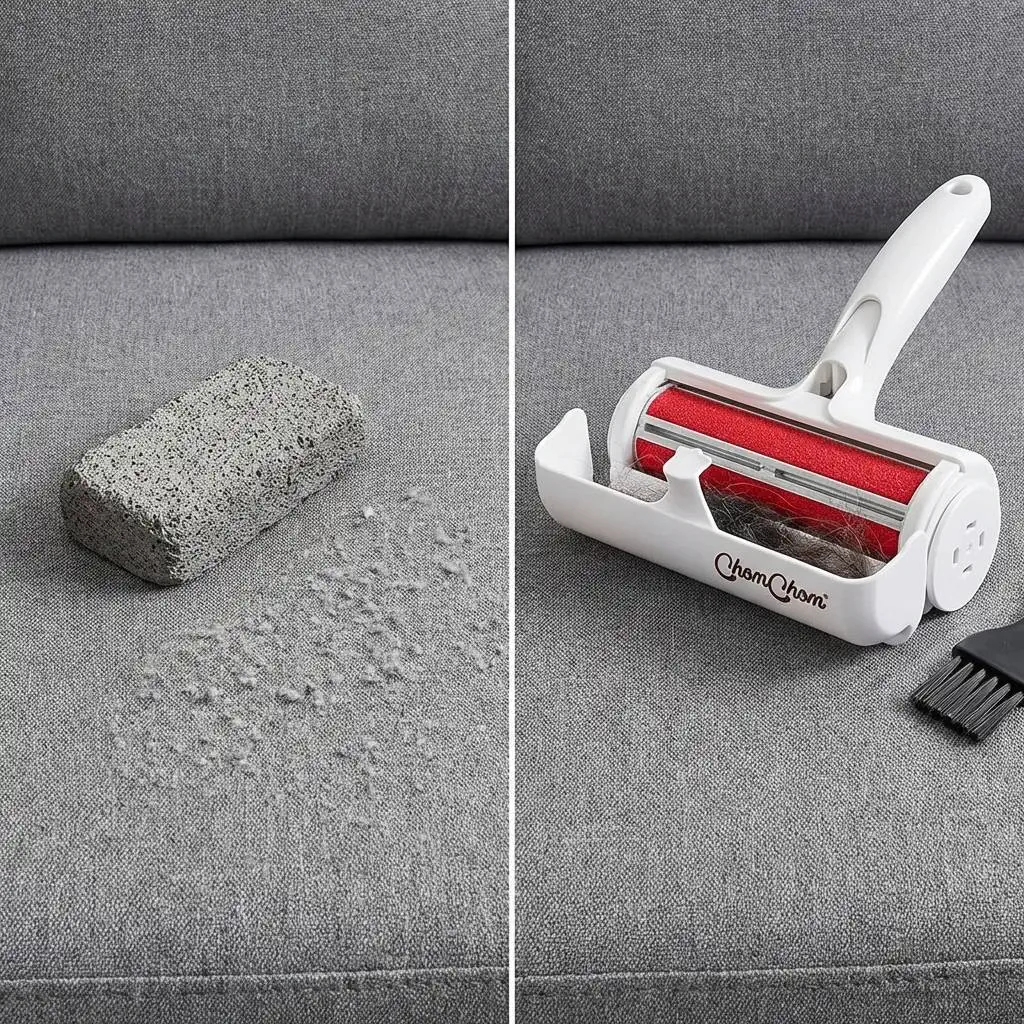
The Fur-Zoff is the rugged veteran. Honestly, it looks like a pumice stone you’d use on calloused feet. It is made from 90% recycled foamed glass. My eco-heart flutters a bit at that stat—taking waste glass and turning it into a tool is a beautiful concept.
The ChomChom Roller is the mechanical marvel. It’s a chunky, T-shaped device made of high-gloss ABS plastic. No batteries, no sticky tape, just a clever electrostatic mechanism involving directional velvet strips. While it is plastic (we will get to that debate later), it claims to be a permanent fixture in your cleaning kit.
Both are better than disposables. But we aren’t just here for participation trophies. We need to know which one works.
Round 1: The “Elbow Grease” Factor
Let’s be real: cleaning up pet hair is a chore. If a tool makes me sweat, I’m probably not going to reach for it every day.
Using the Fur-Zoff is… visceral. Because it has no moving parts, you have to scrape it across the fabric. It creates a high-friction drag. On a small chair, it’s fine. But trying to de-fur an entire sectional? It feels like a workout. You have to use short, forceful strokes to pull the hair up.
The ChomChom operates on a completely different kinetic level. You move it back and forth in short, rhythmic bursts. Chom-chom, chom-chom. It’s surprisingly satisfying. Because it has rollers and a squeegee blade inside, it glides rather than drags. I cleaned my entire duvet in about 45 seconds without breaking a sweat. With the Fur-Zoff, I felt like I was sanding a deck.
Verdict: If you want speed and less physical exertion, the ChomChom wins.
Round 2: Fabric Safety (Why I’m Worried About Your Couch)
This is the most critical section for anyone who cares about sustainability. Why? Because “Fast Furniture” is a huge environmental problem. If a cleaning tool ruins your high-quality sofa and forces you to buy a new one, that tool is not sustainable.
I love that the Fur-Zoff is made of recycled glass, but honestly? It feels like taking a piece of sandpaper to your favorite sweater. It’s a sensory nightmare for me. The stone is abrasive. That is how it works—it grabs the hair by snagging it. On durable carpets or heavy denim, this is fine. But on a linen sofa or a knit blanket? The snag-fear is real.

The ChomChom uses directional red velvet nylon strips. It’s the same concept as those old-school lint brushes, but turbocharged by the internal mechanism. It grabs hair without grinding down the fibers of your upholstery. It respects the fabric.
Verdict: I can’t risk my furniture with the stone. The ChomChom is far gentler.
Round 3: The Aftermath (Cleaning the Cleaner)
So, you’ve got the hair off the couch. Now where is it?
With the Fur-Zoff, the hair doesn’t magically disappear. The stone balls it up into little clumps that sit on top of the fabric. You scrape, the hair balls up, and then you have to go back and pick those hairballs off the couch by hand. It’s a two-step process.
Worse, the Fur-Zoff is “consumable.” As you use it, the stone slowly wears down, leaving a fine dust or grit behind. So now you have hairballs and stone dust to deal with.
The ChomChom has a built-in trap chamber. As you rock it back and forth, the internal squeegee flicks the hair into a compartment in the handle. Scrape. Trap. Gone. When you’re done, you pop the lid and dump a solid brick of dust and fur into the trash (or compost, if you compost pet hair!). It’s clean. It’s contained.
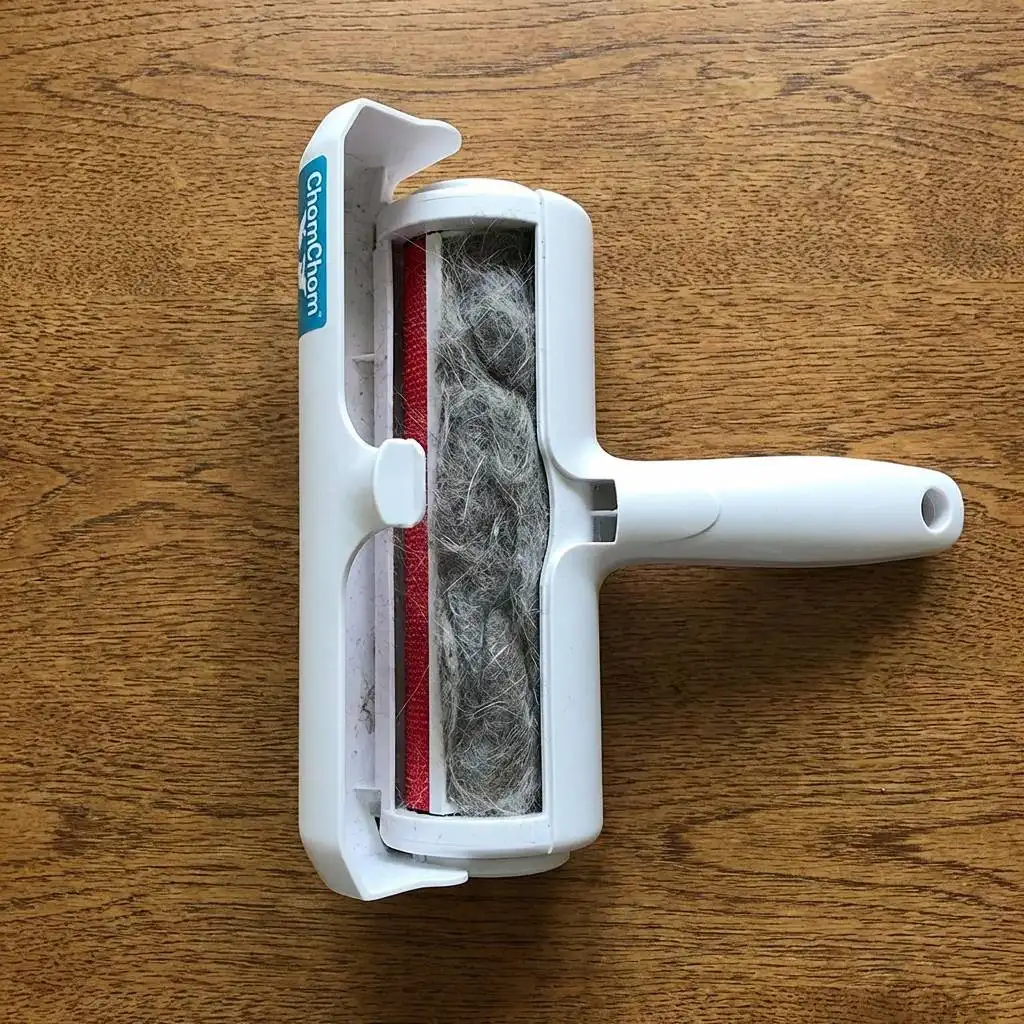
Verdict: Scrape. Ball up. Pick up. Repeat. It’s exhausting. The ChomChom eats the mess for you.
Comparison Table: The Eco-Warrior’s Breakdown
| Feature | Fur-Zoff (The Stone) | ChomChom Roller (The Machine) |
|---|---|---|
| Material Composition | 90% Recycled Foamed Glass (Excellent) | BPA-Free ABS Plastic Body (Durable) |
| Longevity | Consumable (Wears down over time) | “Buy It For Life” (Indefinite if cared for) |
| Fabric Safety | High Risk (Abrasive, can pill fabric) | Low Risk (Gentle velvet brush) |
| Waste Creation | Creates stone dust/grit during use | Zero operational waste |
| Best Application | Car mats, heavy carpets, rugged liners | Sofas, beds, clothes, delicate upholstery |
The Sustainability Paradox (Why Plastic Won This Time)
I know, I know. I can hear you screaming at the screen: “Luna, the ChomChom is made of plastic! How can you recommend it?”
This is the sustainability paradox. We often think “Recycled = Good” and “Plastic = Bad.” But we have to look at the lifecycle. The Fur-Zoff is made of recycled materials, which is fantastic. But it is a consumable product. It turns into dust and eventually disappears, meaning you have to buy another one. It requires shipping and packaging every time you replace it.
The ChomChom is plastic, yes. But it is Durable Plastic, not single-use plastic. It is a tool meant to last for years, potentially a decade. If one plastic tool prevents me from buying 500 rolls of sticky tape or ruining a sofa that ends up in a landfill, the net environmental impact is positive. It’s an investment in waste reduction.
Final Verdict: Which One Belongs in Your Eco-Kit?
If you are a professional detailer cleaning sand and embedded dog hair out of heavy-duty car floor mats, get the Fur-Zoff. Its abrasive nature is perfect for rugged, indestructible carpets.
For everyone else—if you want to clean your duvet, your yoga pants, your curtains, or your couch—the ChomChom Roller is the superior choice. It captures the hair, it protects your fabrics, and it doesn’t leave a pile of grit behind.
Don’t let the plastic scare you off. Treat it well, and it will keep your home fur-free without filling your trash can with sticky tape.
Frequently Asked Questions
Is the Fur-Zoff safe for delicate clothes?
I strongly recommend against it. It is essentially a stone. Using it on leggings, knits, or silk will almost certainly cause snagging or pilling. Keep it on the carpet.
Does the ChomChom work on short dog hair?
Yes! The electrostatic charge created by the velvet strips is excellent at pulling up short, stubborn hairs like Pitbull or Pug fur that usually weave into the fabric.
Why does my Fur-Zoff smell like sulfur?
This is a common complaint. Because it is made from foamed recycled glass, it can sometimes release a distinct sulfur or “rotten egg” smell, especially when it’s new or wet. The ChomChom is odorless.
Can I recycle my ChomChom eventually?
The body is made of ABS plastic, which is technically recyclable in many facilities (Type 7 or sometimes classified under rigid plastics), but you would need to disassemble it and remove the metal pins and fabric strips first. Ideally, you keep it for life so you never have to.
