

Cat Hair vs. The ChomChom: Saving Your Sofa (And The Planet)
We need to talk about the sound. You know the one. That distinctive rrriiippp sound of peeling a sticky sheet off a lint roller. It used to be the soundtrack of my life. I’d be five minutes late for work, frantically tearing off sheet after sticky sheet, trying to depilate my black leggings because my rescue tabby, Barnaby, decided to use my legs as a scratching post right before I left the house.
I’m Luna, and I’m a recovering disposable roller addict. I love my cat more than anything, but a year ago, I had a realization that made my stomach turn. I looked at the trash can next to my sofa. It was overflowing with crumpled, gray-tinged, adhesive-coated paper. I realized my cleaning habit was generating a mountain of non-recyclable waste every single month. I needed a zero-waste intervention for my couch, and that led me to the ChomChom Roller.
The Sticky Roller Graveyard: Why We Need to Switch
Let’s do some uncomfortable math. I promise it’s important. If you are a standard cat owner living with a shedder, you probably use about 3 sticky sheets a day. Maybe more if you have guests coming over. That’s roughly 90 sheets a month.
Over a year? You are tossing over 1,000 sheets of coated paper into the bin. And here is the ugly truth: that paper is not recyclable. Because of the chemical adhesive, it’s destined for a landfill nightmare where it will sit for decades, if not centuries.
Buying these rollers in bulk isn’t a “deal.” It’s an environmental tax we are paying for convenience. Every time we toss a used roll, we are adding to a problem that our planet cannot handle. We must stop thinking of cleaning tools as disposable. If we want to keep enjoying our fur-babies without drowning in waste, we have to change our tools.
How the ChomChom Handles Cat Hair (The Science of Static)
So, how does a hunk of plastic with no batteries and no sticky tape actually work? It’s not magic; it’s physics. Specifically, electrostatic charge.
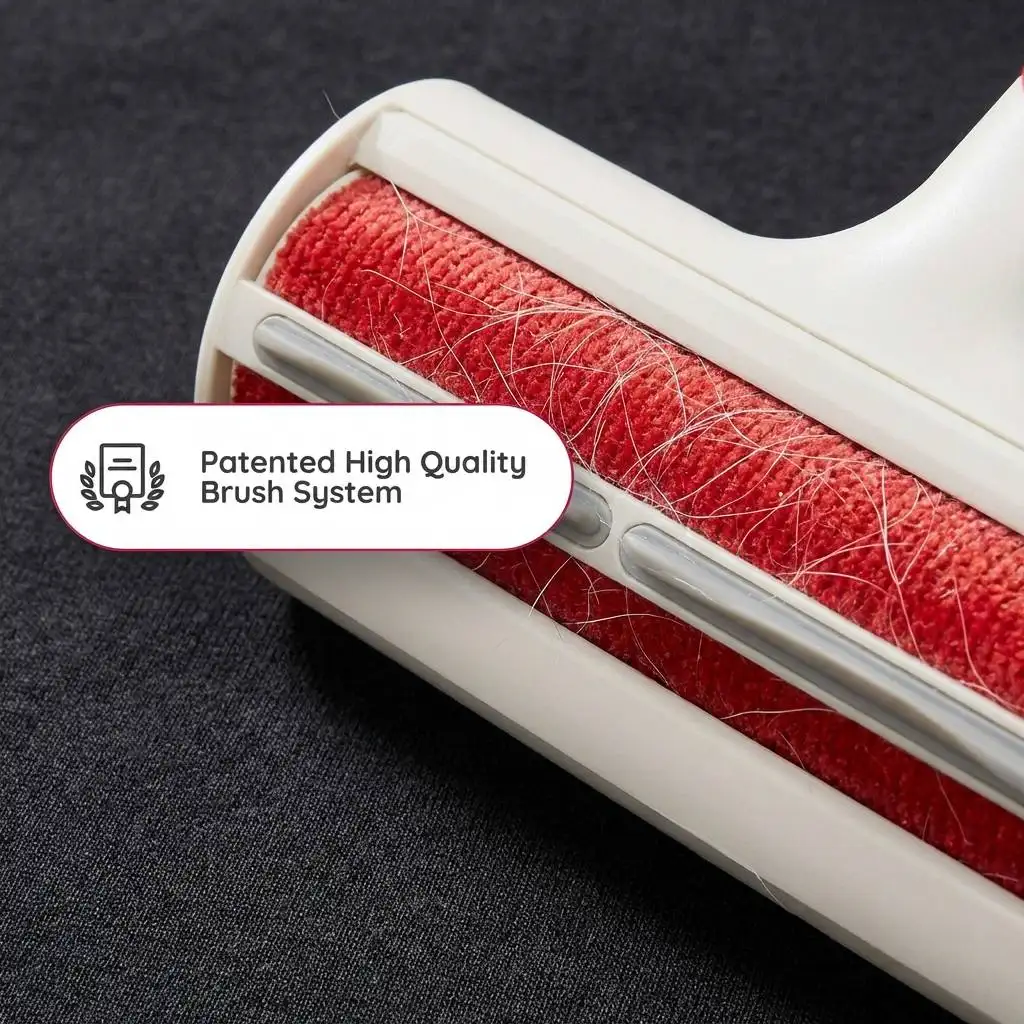
Cat hair is notoriously difficult to clean because it is finer than dog hair. It doesn’t just sit on top of your sofa; it weaves itself into the fabric fibers. Sticky tape grabs the surface fuzz, but it often leaves the embedded hairs behind. The ChomChom operates differently. It uses two directional strips of red velvet fabric (lint brush material) separated by a rubber squeegee.
When you move the roller back and forth, the friction creates a static charge. The red velvet grabs those fine hairs like a magnet, ripping them out of the upholstery weave. As you push and pull, the internal mechanism flips the brush back and forth, scraping the hair off the velvet and trapping it inside the rear chamber.

The “White Cat, Black Sofa” Stress Test
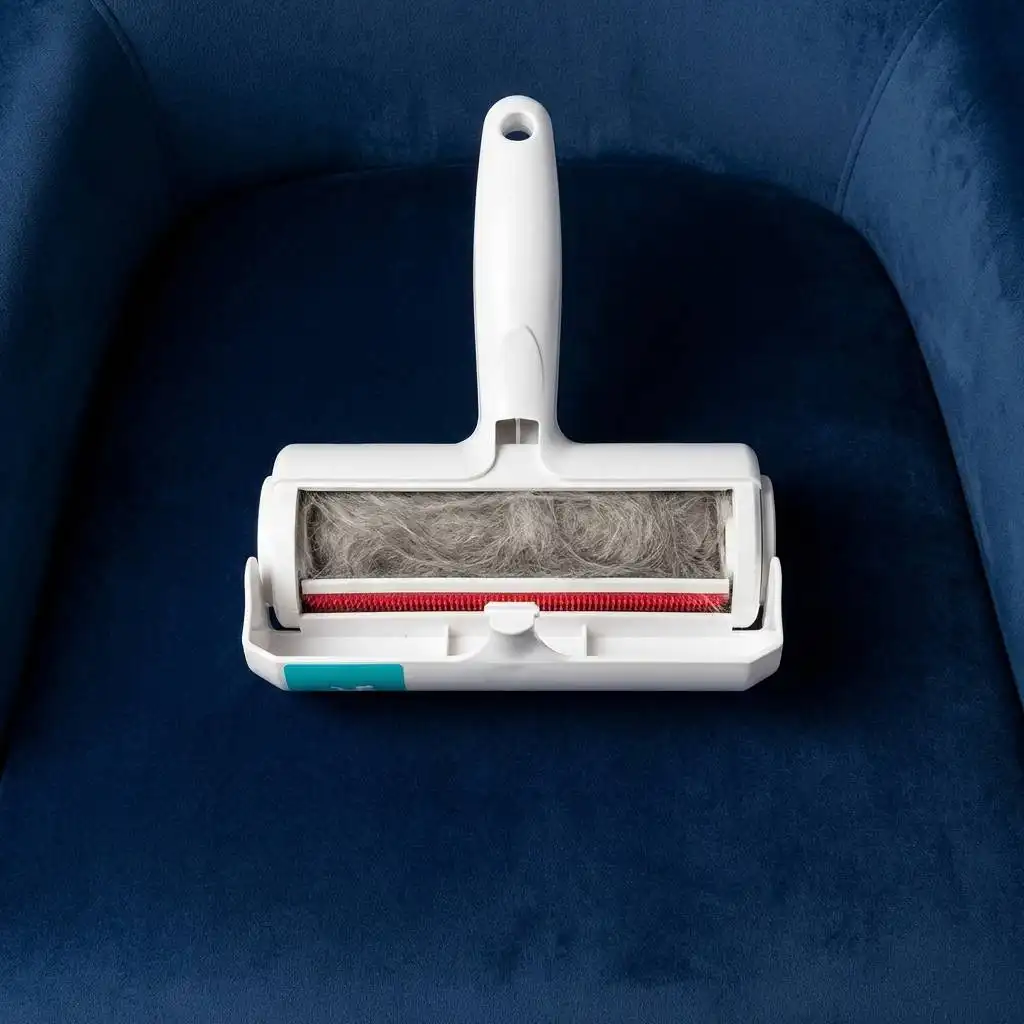
I put this to the test during Barnaby’s spring shed—also known as “fur-baby confetti” season. My navy blue velvet armchair looked like it had grown a beard. Usually, this would take half a roll of sticky tape.
With the ChomChom, the motion is aggressive. Push. Pull. Click. Gone. The sound is clunky, not sticky. Within thirty seconds, the blue velvet was actually blue again.
The fascinating part is how it stores the waste. Cat hair is soft and compressible. Unlike stiff dog hair that might fan out, the back-and-forth motion of the ChomChom rolls the cat hair into a dense, cigar-shaped cylinder inside the trap. I didn’t have to empty it until I had finished the entire living room. It held a surprising volume of fluff without clogging.
Where It Fails: The “Cat Lady” Reality Check
I value honesty over sales pitches. The ChomChom is a green-cleaning powerhouse, but it is not perfect. There are specific “cat lady” scenarios where it struggles.
- Do NOT use it on the cat: I know it’s tempting, but this is a hard plastic tool with a pinching mechanism. It is for furniture, not fur-babies.
- Loose Clothing: If you are trying to clean a t-shirt you are currently wearing, it’s difficult. The roller needs tension to generate that static friction. If the fabric moves with the roller, it won’t pick up much. You need to pull the fabric taut.
- The Hairball Factor: Do not use this on wet messes or hairballs. The velvet strips are for dry hair only. Moisture will ruin the mechanism and make the fabric gross.
ChomChom vs. Disposable Rollers (The Eco-Showdown)
Stop buying those sticky refills in bulk. Honestly, if you are still using adhesive paper to clean a whole sofa in 2024, you are literally throwing money into the trash can. The ChomChom isn’t perfect, but it pays for itself in two months.
Here is the breakdown of why I refuse to go back to tape:
| Feature | ChomChom Roller | Standard Sticky Roller |
|---|---|---|
| Cost Per Year | $25 (One-time purchase) | $60 – $100+ (Refills) |
| Waste Generated | Zero (Plastic is durable) | High (Hundreds of non-recyclable sheets) |
| Effectiveness on Embedded Hair | High (Digs deep) | Low (Surface only) |
| Durability | Years of use | Disposable |
This is a “buy it for life” philosophy. We consume enough plastic in our daily lives; let’s not add to it with our cleaning habits.
Mastering the Technique: Don’t Be Gentle
If you buy this and think it doesn’t work, you are probably being too gentle. This was my mistake at first. I was rolling it slowly, like a paint roller. That does nothing.
You have to be vigorous. Short, sharp, back-and-forth strokes are the secret. You need to hear that clack-clack-clack sound. That sound is the internal brushes flipping and cleaning themselves. If you aren’t making noise, you aren’t making static, and you aren’t picking up hair.
FAQ: Your Cat Hair Questions Answered
Does the ChomChom work on long-haired cats (Maine Coons/Persians)?
Absolutely. In fact, it works better on long hair than short, prickly hair. The long strands wrap easily into the collection chamber.
Can I wash the ChomChom roller if it gets dirty?
No! Do not submerge it in water. The metal axle and the velvet strips can degrade. If the red strips get dusty, wipe them with a damp cloth, but never soak the device.
Is it better than a vacuum for cat trees?
I find it faster than lugging out the vacuum. It creates enough friction to rip the hair off the carpeting of a cat tree, which is notoriously stubborn.
Does the squeaking noise scare cats?
It can. The vigorous motion creates a distinct plastic clacking sound. My cat, Barnaby, was skeptical at first, but now he ignores it. Just don’t use it right next to their ears while they are sleeping.
