

The Sticky Tape Addiction Must End: Why the ChomChom Pet Roller is Your Zero-Waste Exit Strategy
We need to talk about your trash can. Specifically, that sticky, wadded-up mess of adhesive sheets you throw away every time your cat sits on the sofa. It is piling up in landfills, and quite frankly, it is embarrassing for us as a species.
I know you want a clean house. I want a clean house too. But buying disposable rolls wrapped in plastic, peeling off sheets coated in chemicals, and burying them in the ground for the next 500 years? That is not the way. There is a better option that stops the cycle of consumption.
The Waste Problem
Every time you peel a sheet off a standard lint roller, you are voting for waste. You are telling manufacturers, “Yes, please chop down more trees for paper, coat them in non-recyclable glue, wrap them in shrink wrap, and ship them to me so I can use them once and throw them away.”
It is madness. If you brush your dog daily, you might go through a roll a week. That is 52 plastic cores and hundreds of sticky sheets entering the waste stream annually from just one household. Multiply that by millions of pet owners. We are literally drowning the planet in adhesive paper just because we don’t like fur on our black leggings.
We have normalized disposability. We treat cleaning tools like they are single-use napkins. The chomchom pet roller challenges this entire mindset. It forces you to stop buying refills. And that is exactly why big adhesive companies probably hate it.

Sustainable Solution
Let’s address the elephant in the room: The ChomChom is made of plastic. Specifically, rigid, high-gloss white ABS plastic. As a zero-waste advocate, I usually cringe at plastic. But there is a massive difference between single-use plastic and durable goods.
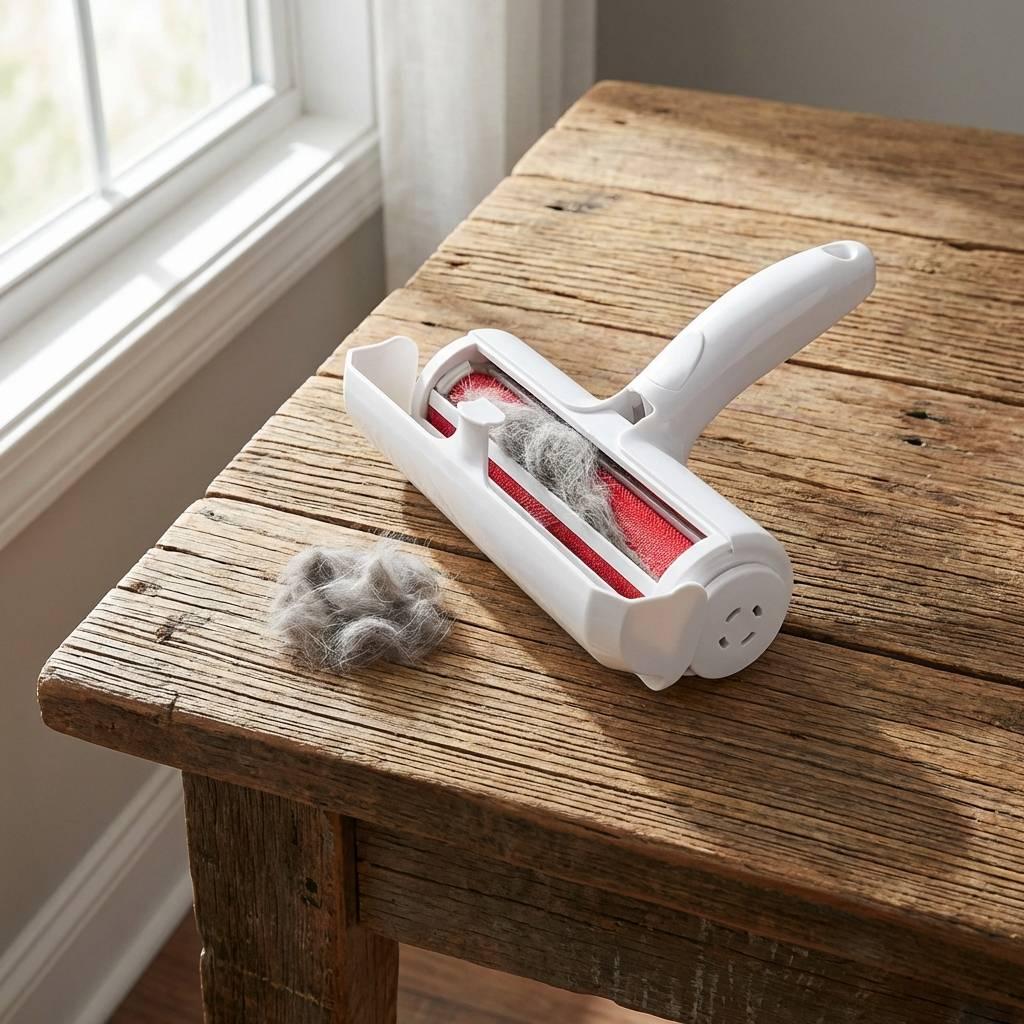
This tool is built like a tank. It doesn’t use batteries (e-waste), and it doesn’t use sticky tape (landfill nightmare). Instead, it uses physics and friction. The mechanism is simple but brilliant. It relies on two strips of red directional velvet fabric—similar to those old-school lint brushes your grandpa had, but turbocharged.
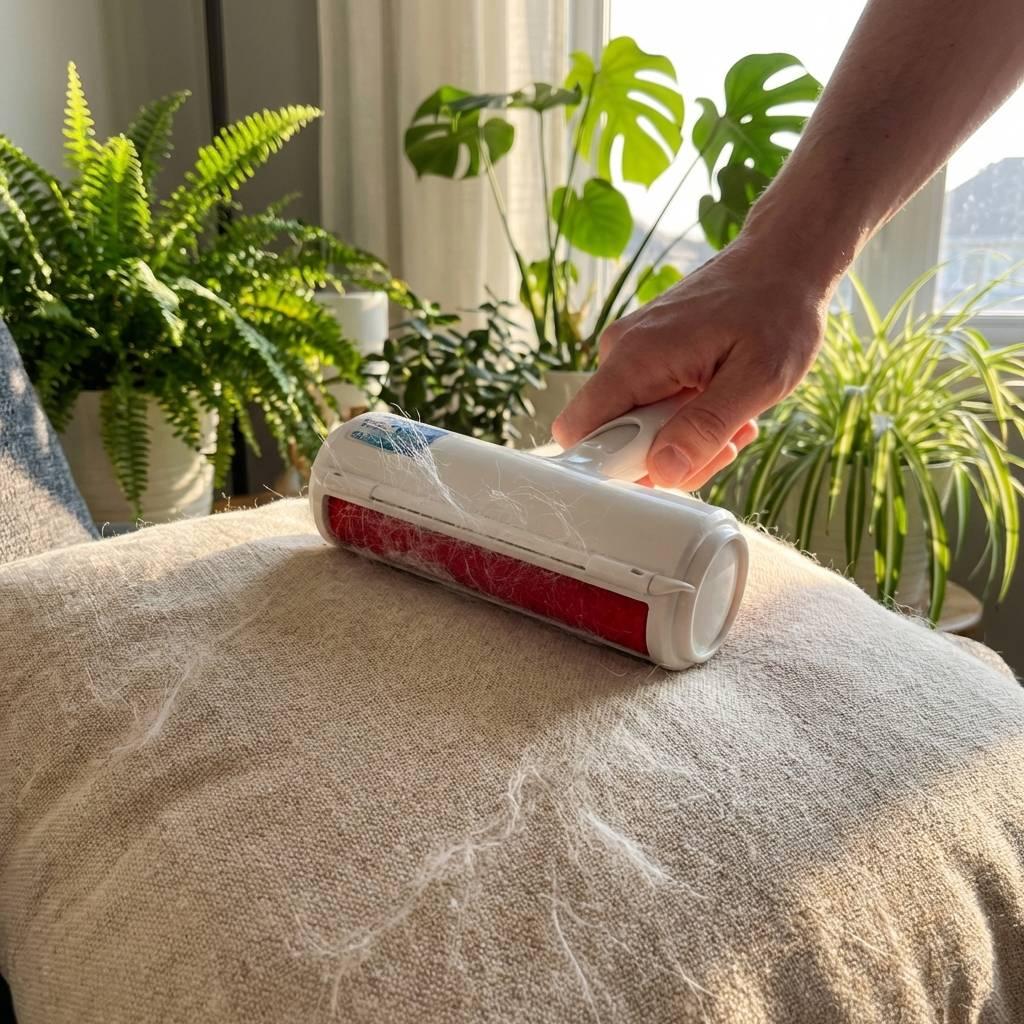
When you push and pull the roller, that red velvet grabs the hair. A squeegee blade inside scrapes the fur off the velvet and traps it in a chamber. You empty the chamber, not your wallet. The fur goes into the compost bin (yes, pet hair is compostable!), and the tool goes back in the drawer.
Impact
Switching to a mechanical roller is one of the easiest “green wins” you can make. The math is simple, and the environmental payoff is immediate. You stop the recurring shipment of refills, which cuts down on carbon emissions from transport. You stop generating non-recyclable adhesive waste.
Here is how the impact breaks down when you stop feeding the landfill monster:
| Feature | Sticky Roller Refills | ChomChom Pet Roller |
|---|---|---|
| Lifespan | A few days/weeks | Years (Reusable) |
| Waste Stream | Coated paper, plastic cores, wrap | Only the collected hair (Compostable) |
| Chemicals | Adhesives and bleaching agents | None (Mechanical action) |
| Long-term Cost | High (constant subscriptions) | Zero (One-time purchase) |
Stop being a slave to the refill aisle. It hurts the planet, and honestly, it’s just not smart. Grab a tool that works, clean up that hair, and keep the trash can empty.
