

The “ChomChom Cat” Guide: How to Ditch Single-Use Sticky Tape & Conquer Pet Hair Forever
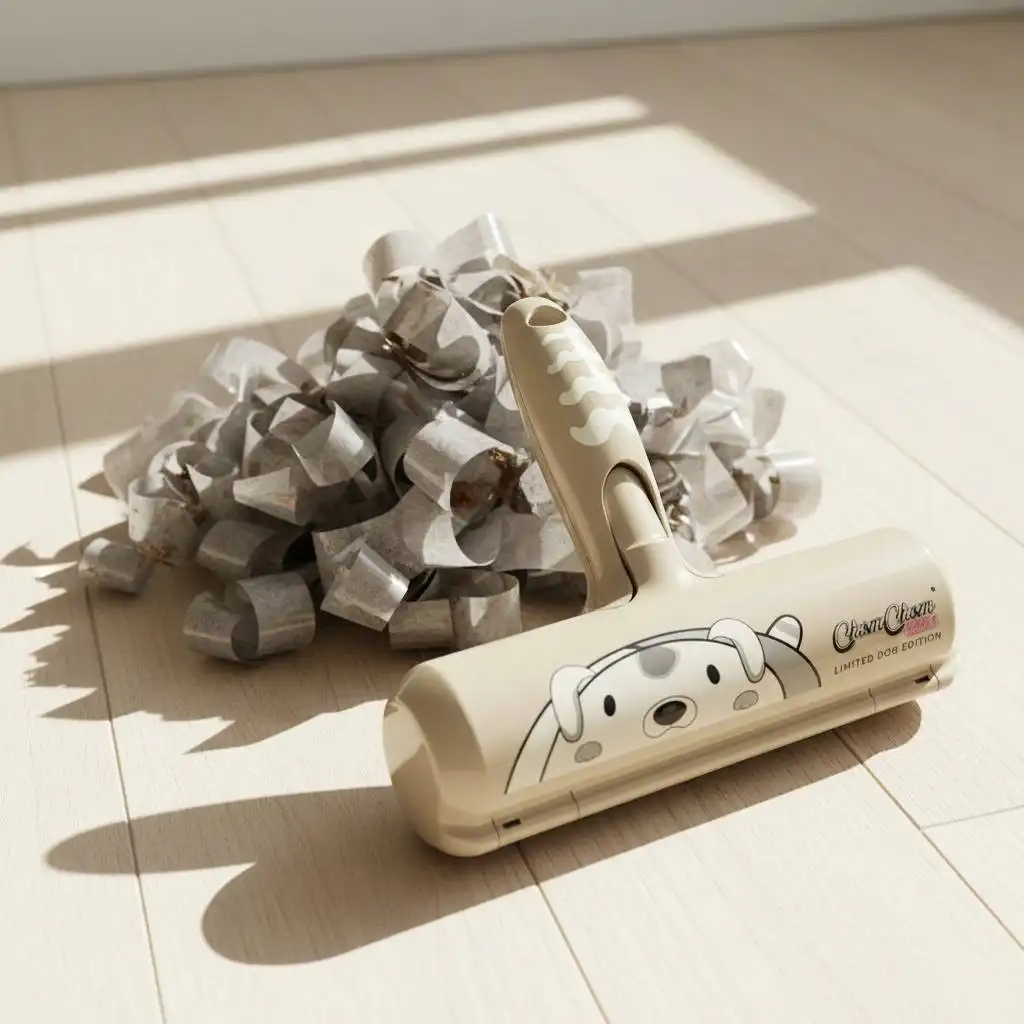
I want you to visualize something for me. Picture your kitchen trash can right now. If you are a cat owner like me, I know exactly what is sitting near the top. It’s a crumpled, sticky, grey ball of paper covered in fur, isn’t it?
Actually, it’s probably three or four of them.
We call this the “Sticky Tape Graveyard.” Every time I used to clean my sofa, I would peel off sheet after sheet of non-recyclable adhesive paper. Peel. Wipe. Toss. Repeat. It creates a knot in my stomach just thinking about the sheer volume of waste we generate just to keep our black leggings looking decent. I remember standing over my bin one Tuesday, holding an empty cardboard tube from a roller I bought three days prior, and thinking: This is unsustainable madness.
We have to do better. For our homes, and for the planet. That is why I stopped buying refills and started using the ChomChom.
The Sticky Tape Hangover: Why We Need a Change
Let’s look at the ugly truth. A standard sticky lint roller has about 60 sheets. If you have a shedder—like my rescued longhair—you probably burn through five sheets just to clean one armchair. Do the math. That is hundreds of adhesive sheets heading straight to the landfill every single year from your house alone.
Multiply that by the millions of cat owners out there. It is a landfill nightmare.
We treat cleaning tools like fast fashion—cheap, disposable, and ultimately garbage. But the zero-waste movement isn’t just about metal straws; it’s about auditing every part of our routine. The chomchom roller cat hair remover represents a shift in philosophy. It is a “buy it for life” tool in a world obsessed with disposables. Honestly, if you are still buying sticky lint rollers in 2024, you are actively choosing convenience over the planet. It’s harsh, but the math doesn’t lie.

Anatomy of the ChomChom: No Batteries, No Trash
So, how does it work if there’s no glue? This is where physics saves the day. The device is a chunky, T-shaped tool made of rigid, high-gloss plastic.
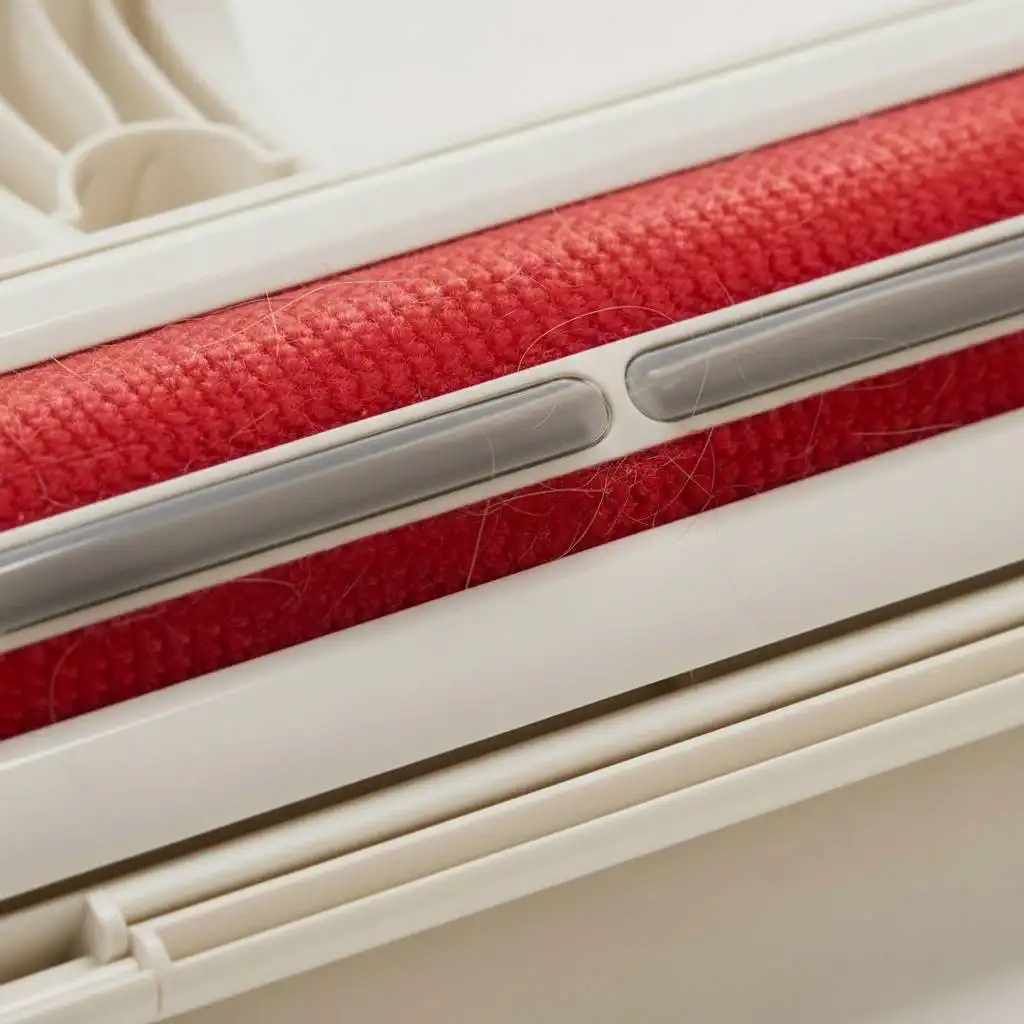
It doesn’t use adhesive. Instead, the magic happens underneath. The head features two parallel strips of red directional velvet fabric—the kind you see on those old-school lint brushes—separated by a thin grey rubber squeegee blade. When you push and pull the roller, the friction creates an electrostatic charge.
That charge pulls the hair from the fabric, and as you change direction, the rubber blade flicks the hair backward into a hidden trap inside the roller head. That’s it. No batteries to corrode in a landfill. No sticky sheets to peel. Just static electricity and a smart design.
The Big Question: Can You Use ChomChom on a Cat Directly?
I see this question popping up in forums constantly: can you use chomchom on cat bodies directly? The logic seems sound—it removes hair from the couch, why not go to the source?
STOP. Do not do this.
The mechanism relies on aggressive friction and a rubber blade that snaps back and forth. If you try this on your kitty, it will pinch their skin and pull their hair painfully. It is not a grooming tool; it is a furniture tool. Using it on a living animal is cruel and ineffective.
If you want to groom your cat sustainably, look for bamboo brushes with natural bristles or a compostable grooming glove. Keep the ChomChom for the upholstery.
Style Meets Sustainability: The ChomChom Roller Limited Edition Cat Designs
Sustainability works best when you actually love the objects you own. If a tool is ugly, you hide it. If you hide it, you don’t use it. Or worse, you lose it and buy another one.
While the standard model is a clean white, the brand occasionally drops the chomchom roller limited edition cat versions. These often feature cute cat illustrations, ears, or specific colorways like orange tiger stripes. It sounds superficial, but aesthetics matter for longevity. When you have a tool that looks professional—with that glossy finish and solid ergonomic handle—you treat it with respect. You don’t toss it in the junk drawer. You keep it for years. That is the essence of sustainable living.
The “Fur-pocalypse” Test: Does it Actually Work?
I won’t greenwash this—no tool is perfect. But let’s look at the reality of using this daily versus the sticky tape.
The Eco-Warrior Pros
- Infinite Reuse: I have had mine for three years. It still grabs hair like day one.
- Deep Cleaning: Sticky tape only grabs surface hair. The directional velvet digs into the fabric fibers and pulls out the stuff that’s been woven in.
- Zero Guilt: Cleaning the sofa doesn’t result in a handful of trash.
The Honest Cons
- The Noise: It is loud. The “chom-chom” sound is the plastic clicking back and forth. It might startle a skittish cat at first.
- The Workout: You have to use a vigorous back-and-forth motion to generate the static. It takes a bit of elbow grease.
- Fabric Limits: It struggles on loose knits (it can snag) or slippery silks where static doesn’t build up well.
How to Clean Your Roller (Without Wasting Water)
One of my favorite things about the chomchom cat hair remover is the disposal process. On the back of the handle, there is a button. Push it, and a compartment pops open.
Inside, you will find a dense roll of collected fur/dust. Because I use natural litter and my cat is… well, organic… I empty this hair directly into my compost bin. It returns to the earth rather than sitting in a plastic bag for 500 years.
To clean the tool itself, do not run it under the tap constantly. That wastes water. Just take a damp cloth and wipe down the red velvet strips and the plastic body. Simple.
Final Verdict: Is It Worth the Investment?
A ChomChom costs more upfront than a generic lint roller from the dollar store. But that dollar store roller is a trap. You pay for it forever in refills, and the planet pays for it in plastic waste.
If you switch to the ChomChom, you stop the cycle. It is a solid, durable piece of engineering that solves a specific problem without creating a new one. Is it perfect? No. Is it the single most impactful swap a pet owner can make for their cleaning routine? Absolutely.
Stop feeding the landfill. Get the roller.
Frequently Asked Questions
How long does a ChomChom roller last?
Unlike cheap plastic toys, this is built from rigid ABS plastic. With proper care (don’t drop it on concrete), it can last for years. The red velvet strips are incredibly durable and don’t lose their “grip” over time like adhesive does.
Is the ChomChom roller recyclable if it breaks?
The body is made of ABS plastic, which is technically recyclable, though you may need to check with your local facility as it requires disassembly. However, the goal is longevity so you never have to recycle it.
Does it work on dog hair too?
Yes! While we focused on the chomchom cat aspect, the mechanism works on any pet hair. It is particularly good at pulling up short, wiry dog hairs that weave into car upholstery.
Why is my ChomChom just pushing hair around?
You are likely using it like a sticky roller (rolling one way). You must move it back and forth aggressively in short strokes. This action flips the rubber blade and traps the hair inside.
