

5 Sustainable Tools “Similar to ChomChom Roller” (And Why Cheap Dupes Are a Trap)
Let’s take a moment of silence for the thousands of sticky tape sheets currently rotting in landfills right now. You know the drill. You roll, you peel, you toss. Rip. Toss. Rip. Toss. It is a single-use nightmare.
If you are here, you are probably looking for something “similar to the ChomChom Roller.” Maybe the price tag scared you off. Maybe you just want to see what else is out there. I get it. I really do.
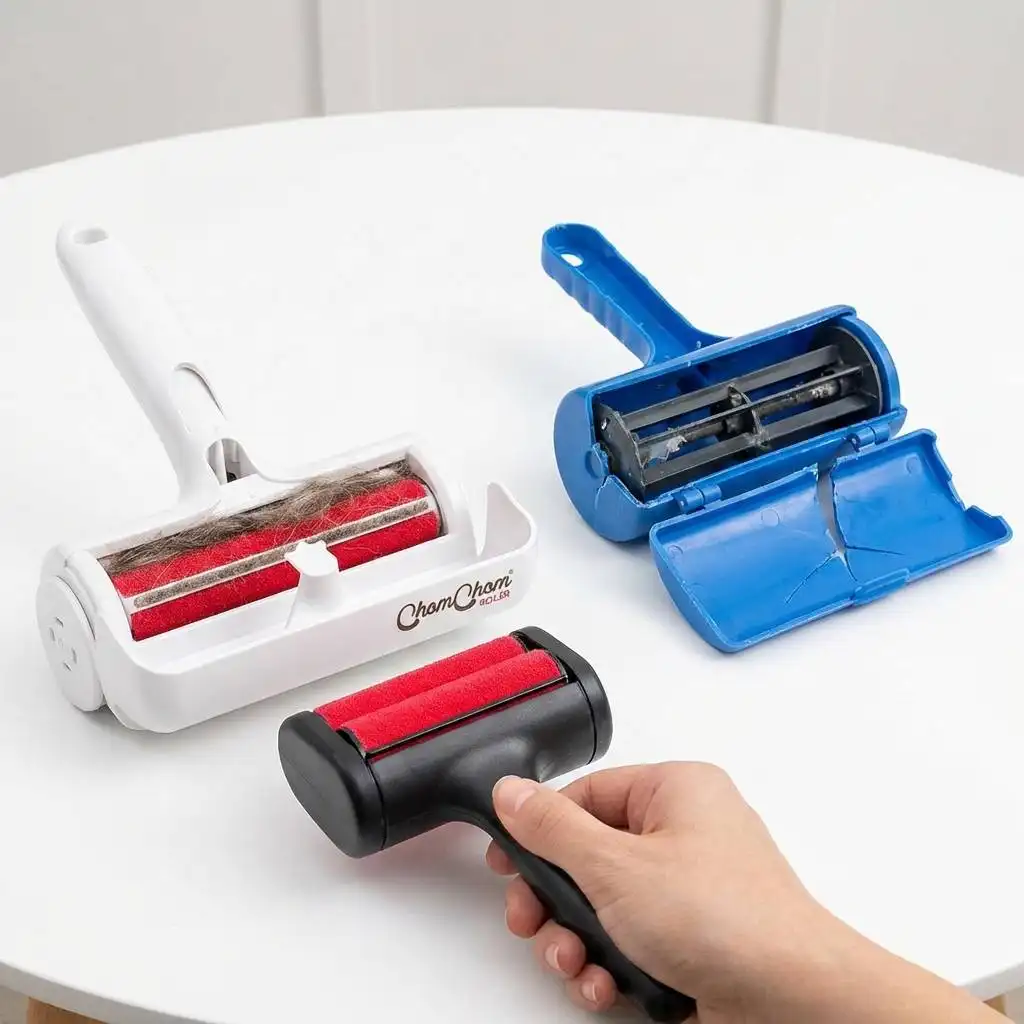
A few years ago, I had a weak moment. I balked at the price of a genuine reusable roller and bought a generic knock-off that looked exactly the same online. It arrived in excessive plastic packaging, smelled like chemical factory runoff, and the handle snapped in three days. That piece of broken orange plastic is now sitting in the earth forever. It won’t decompose in my lifetime, or my grandkids’ lifetimes.
That was my wake-up call. We have to stop treating durable goods like fast fashion.
The Sticky Tape Graveyard: Why We Need Reusables
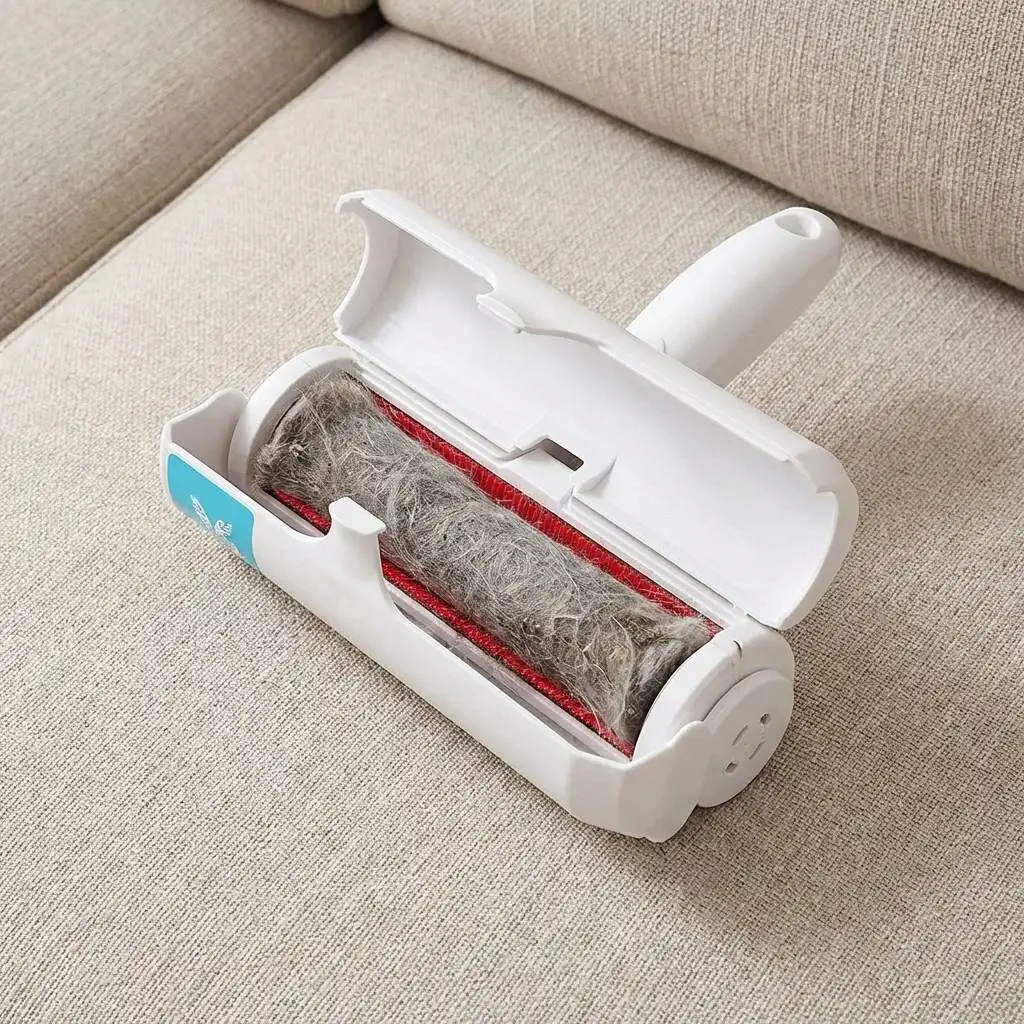
The ChomChom Roller works on a simple, beautiful principle: electrostatic charge and directional friction. It uses specialized velvet strips to grab hair, and a squeegee to trap it. No adhesive. No waste.
Contrast that with the sticky roller. Every time you peel off that gray, fuzzy sheet and toss it in the bin 20 times a day, you are adding to the problem. Those sheets are coated with adhesives that make them non-recyclable. They are literally designed to be trash.
When you search for a tool “similar” to a reusable roller, your criteria shouldn’t just be “removes hair.” It must be “reusable and durable.” If it breaks in a month, it’s just garbage with a waiting period.
The “Dupe” Trap: Why Cheap Knock-Offs Hate the Planet
Go to any major marketplace and search for pet hair rollers. You will see a sea of red, blue, and flimsy white rollers that look identical to the branded version. These are the dupes.
Here is the ugly truth about these “similar” products. While the genuine article uses high-grade, rigid ABS plastic designed to withstand thousands of aggressive back-and-forth motions, the dupes use brittle, cheap recycled blends. They crack under pressure. The velvet strips peel off because the glue is weak. The catch mechanism fails.

This is the “fast-fashion mentality” applied to your cleaning cupboard. Honestly, if you’re buying a plastic tool that you know will break in six months just to save five bucks, you aren’t saving money—you’re renting landfill space. buying a $10 dupe that breaks in a month is infinitely less sustainable than buying one $25 tool that lasts 5 years.
Top 3 Eco-Friendly Alternatives (That Actually Work)
If you want something similar in function (zero waste, reusable) but maybe the roller mechanism isn’t for you, there are legitimate sustainable options. I am not going to list cheap plastic knock-offs here. I am listing tools that respect the planet.
1. The Metal Lint Scraper (AKA “The Carpet Rake”)
This is usually a simple tool with a wooden handle and a copper or metal head with teeth. It looks almost medieval.
- Pros: Zero plastic. It is incredibly effective on deep-pile rugs, stair carpets, and cat trees. It digs deep.
- Cons: It is aggressive. Do not—I repeat, DO NOT—use this on your yoga pants, delicate knits, or thin sofa fabric. It will snag and destroy them.
- Verdict: Best for heavy-duty carpets only.
2. The Rubber Blade Brush (The “Lilly” Style)
These tools use thick rubber bristles or blades to drag hair out of fabrics rather than rolling over it. The physics relies on friction and grip.
- Pros: Virtually indestructible. You can wash it in the sink endlessly. Great for weird corners in the car where a roller is too bulky to fit.
- Cons: It requires significant elbow grease. Unlike the effortless gliding of a roller, you have to physically drag this tool across the surface. You will get a workout.
3. The Old-School Velvet Wand
You might remember these from your grandma’s closet. It’s a flat wand covered in the exact same red directional velvet found on the ChomChom.
- Pros: The mechanism is identical (directional friction). It picks up lint and hair beautifully.
- Cons: The “self-cleaning” aspect is missing. You have to swipe the hair off the wand with your fingers or a separate brush, whereas the ChomChom traps it inside a chamber for you.
Showdown: Genuine Roller vs. The Alternatives
Let’s look at the data. We are aiming for conscious consumption here.
| Product Type | Mechanism | Durability Score (1-10) | Waste Factor |
|---|---|---|---|
| Genuine ChomChom | Static/Velvet + Trap | 9/10 (Sturdy ABS) | Low (Lasts years) |
| Generic “Dupe” | Static/Velvet + Trap | 3/10 (Brittle Plastic) | High (Breaks quickly) |
| Metal Scraper | Mechanical Rake | 10/10 (Wood/Metal) | Zero |
| Sticky Roller | Adhesive Tape | N/A (Disposable) | Extreme (Daily trash) |
While the metal scraper is the winner for pure material sustainability (no plastic), the Roller mechanism is unique because it collects the waste for you. That “chamber” is the key differentiator.
How to Spot a “Greenwashed” Hair Remover
Marketing companies love to slap a green leaf on a box and call it eco-friendly. Don’t fall for it. Here is how to spot a “similar” product that is just future trash:
- The “Buy 1 Get 3 Free” Deal: If they can afford to give you three of them for the price of one, the manufacturing cost is pennies. That implies low value and disposability.
- No Replaceable Parts: If you can’t fix it, it is disposable. High-quality tools often allow you to pop parts back in if they dislocate, rather than snapping off entirely.
- Vague Material Claims: If it says “Eco Plastic” but doesn’t specify recycled content or biodegradability, it’s usually just greenwashing.
The Final Verdict: Is It Worth The Investment?
Look, I know $25-$30 feels like a lot for a “hair remover.” But calculate the cost per use. If you buy a genuine tool that lasts five years, you are paying pennies per month. If you buy sticky tape, you are paying a monthly subscription to the landfill.
My advice? Buy one high-quality tool. Whether it is the genuine ChomChom or a solid metal rake for your carpets, just make sure it is built to last. Take care of it. Clean it. Keep it out of the trash.
FAQs About Hair Remover Alternatives
Is the Uproot Cleaner better than ChomChom?
The Uproot is essentially the “Metal Lint Scraper” I mentioned above. It is better for deep-cleaning sturdy carpets and cat towers. However, it is terrible for clothes, bedding, or soft velvet couches because the metal teeth can snag and rip the fabric. The ChomChom is safer for delicate surfaces.
Can I wash reusable lint rollers?
This depends on the type. You should never soak a velvet-based roller (like the ChomChom) in water; it ruins the mechanism and the fabric adhesion. Use a damp cloth to wipe it. Silicone or rubber rollers, however, can and should be washed.
Why is my generic roller just pushing hair around?
This is a common issue with dupes. The electrostatic friction seals are often loose, or the velvet quality is poor (too smooth). If the velvet doesn’t have the right “bite,” it just pushes the hair into a pile rather than grabbing it.
Are silicone sticky rollers eco-friendly?
Technically, yes, because they are reusable. However, they lose their stickiness quickly and require constant rinsing and drying between swipes. This wastes a significant amount of water and time compared to a dry velvet roller.
